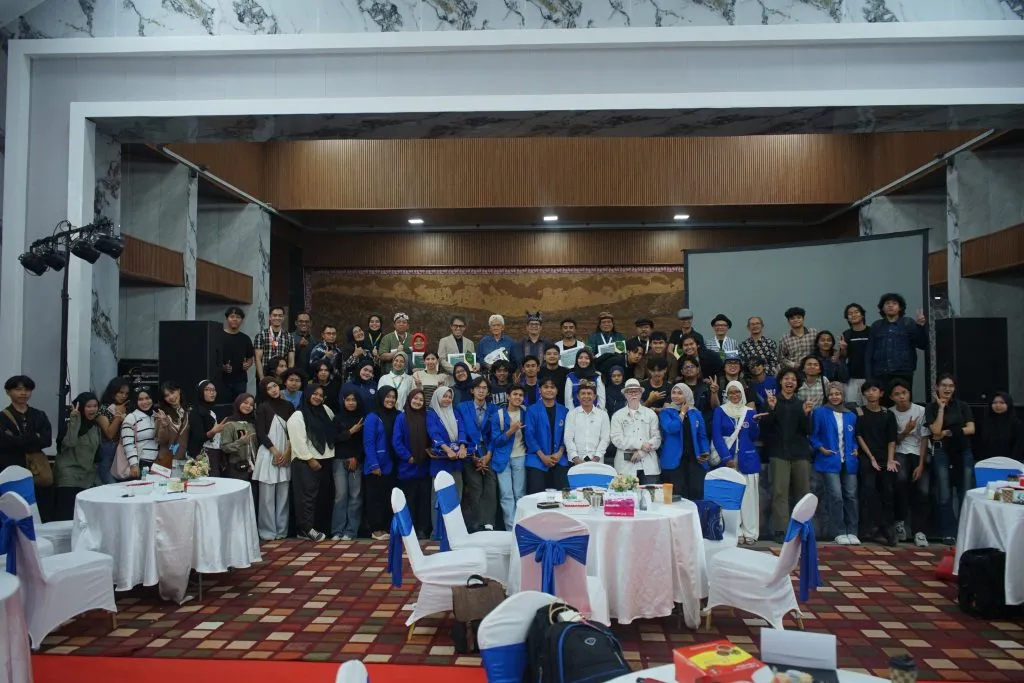
The Indonesian Arts Institute (ISI) Padangpanjang brought together nine maestros, academics and art practitioners from various regions in Indonesia in the 2026 XIII Indonesian Arts Festival (FKI) Maestro Meeting at the Boestanul Arifin Auditorium Building, Wednesday (21/10/2026). Carrying a theme "Maestros and the Future of Indonesian Traditional Arts: Inheritance, Innovation and Sustainability", this activity is a space for dialogue to strengthen the inheritance of artistic knowledge, encourage the regeneration of artists, and maintain the continuity of traditional art amidst changing times.
Chancellor of ISI Padangpanjang, Dr. Febri Yulika, S.Ag., M.Hum., in his speech conveyed the importance of maintaining the continuity of traditional arts through passing on knowledge from masters to the younger generation. The presence of art figures from various cultural backgrounds is a valuable opportunity to exchange experiences, broaden horizons, and strengthen the role of art universities in preserving Indonesia's cultural riches.
The Maestro Meeting is not only a meeting place for artists, but also a space to share knowledge and experiences regarding artistic journeys, creative processes, and challenges in maintaining traditions. Through dialogue across generations and artistic disciplines, this activity is expected to strengthen the relationship between the practical experience of masters, scientific development in universities, and the sustainability of art in society.
A number of topics of concern in this activity include the passing on of maestro knowledge to the younger generation, the regeneration of artists, the role of art universities, as well as efforts to bring together tradition and innovation without losing cultural identity. The discussion also includes documentation and digitization of artistic knowledge, maestro-academic-community collaboration, as well as strategies for maintaining the sustainability of traditional arts amidst social, economic and technological changes.

The FKI XIII Maestro Meeting presented nine figures with expertise and experience who represent the diversity of Indonesian art.
From Bali, present Dr. I Made Sidia, SSP., M.Sn., maestro of puppetry, artist and academic from Gianyar. As the leader of Sanggar Paripurna, he actively develops the art of puppetry through a combination of tradition and innovation and brings his works to the international stage.
The next character is Nuzurlis Koto, painter, sculptor and ceramic artist born in Lasi, Agam, West Sumatra. Active since the 1960s, he has consistently explored ceramic art since 1977 and contributed to ceramic art education.
From Papua, present Darlane Litaay, S.T., S.Sn., M.F.A., contemporary dance artist, choreographer and academic from Sorong. His works explore Papuan cultural identity through a cross-disciplinary approach and have appeared at various international festivals.

The world of cinema is represented Dr. Muhammad Rivai Riza, S.Sn., M.A., or Riri Riza, director, screenwriter, film producer, and academic at the Film and Television Faculty of the Jakarta Arts Institute (IKJ). His works include, among others Sherina's Adventure, Gie, Rainbow Troops, And Athirah, became an important part in the development of Indonesian cinema.
In the field of Javanese traditional dance, it is present Dr. Daryono, S.Kar., M.Hum., an ISI Surakarta academic from Wonogiri who has expertise in the creation, development and reconstruction of Surakarta style classical dance, especially alus dance.
From West Java, Dr. Suhendi Afryanto, S.Kar., M.M., academic and musical practitioner from ISBI Bandung, brings a perspective on the development and research of Sundanese musical art. His experience in the academic field and governance of arts universities also enriches his perspective regarding the sustainability of traditional arts.
Furthermore, Dr. Suwarno Wisetrotomo, M. Hum., curator, art critic, and ISI Yogyakarta academic from Kulon Progo, comes with experience in research and curatorial activities. His work shows the importance of criticism and curation in building public understanding of the development of Indonesian art.
From Aceh, Salaudin, a painting artist and cultural arts conservationist from Lhokseumawe, is known for his exploration of movement as a source of visual inspiration in his works. His experience also shows the richness of regional cultural expression in the development of fine arts.

Meanwhile, the host is represented Asnimar, S.Kar., M.Sn., artist and academic who has served for 37 years as a lecturer at ISI Padangpanjang and founded the Aguang Art Studio. One of his contributions is reconstructing the Piriang Suluah Dance from Nagari Gunuang, Padang Panjang, as part of efforts to maintain the continuity of the Minangkabau traditional dance heritage.
The diversity of backgrounds of the figures present shows that Indonesian traditional arts have a wealth of knowledge, techniques, values ??and philosophies that need to continue to be passed on. The challenge faced is not only maintaining the form of the work or performance, but also ensuring that the knowledge underlying it remains understood and practiced by future generations.
Documentation and digitization are important steps to expand access to artistic knowledge. However, these efforts need to be accompanied by direct learning, practice with masters, research, and community involvement so that the inheritance process does not stop at merely storing documentation.
Art universities have a strategic role in bridging maestro knowledge with educational needs and current developments. Through education, research, creation of works, and community service, the experiences of maestros can be a source of learning and inspiration for the birth of a creative approach that is still based on cultural identity.


The FKI XIII Maestro Meeting at ISI Padangpanjang is expected to strengthen collaboration between maestros, academics, students and the arts community in building a sustainable arts ecosystem. Innovation carried out by understanding the roots of tradition is one way to maintain the relevance of traditional art without losing the values ??and identity inherent in it.
Through this activity, ISI Padangpanjang emphasizes the importance of caring for artistic heritage through a continuous process of inheritance, knowledge development and cross-generational collaboration. In this way, traditional art not only becomes part of the nation's history and identity, but also continues to live, develop and provide meaning for future generations.
Masukkan email Anda untuk menerima brosur dan pengingat jadwal pendaftaran.
 ID
 EN