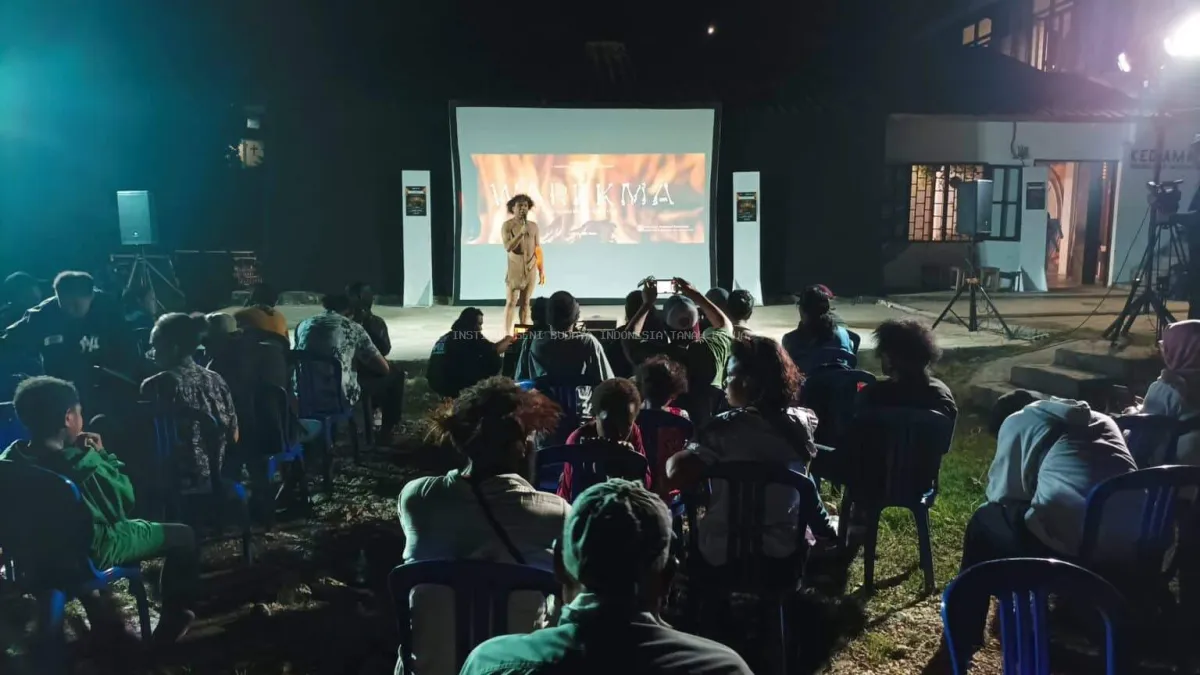
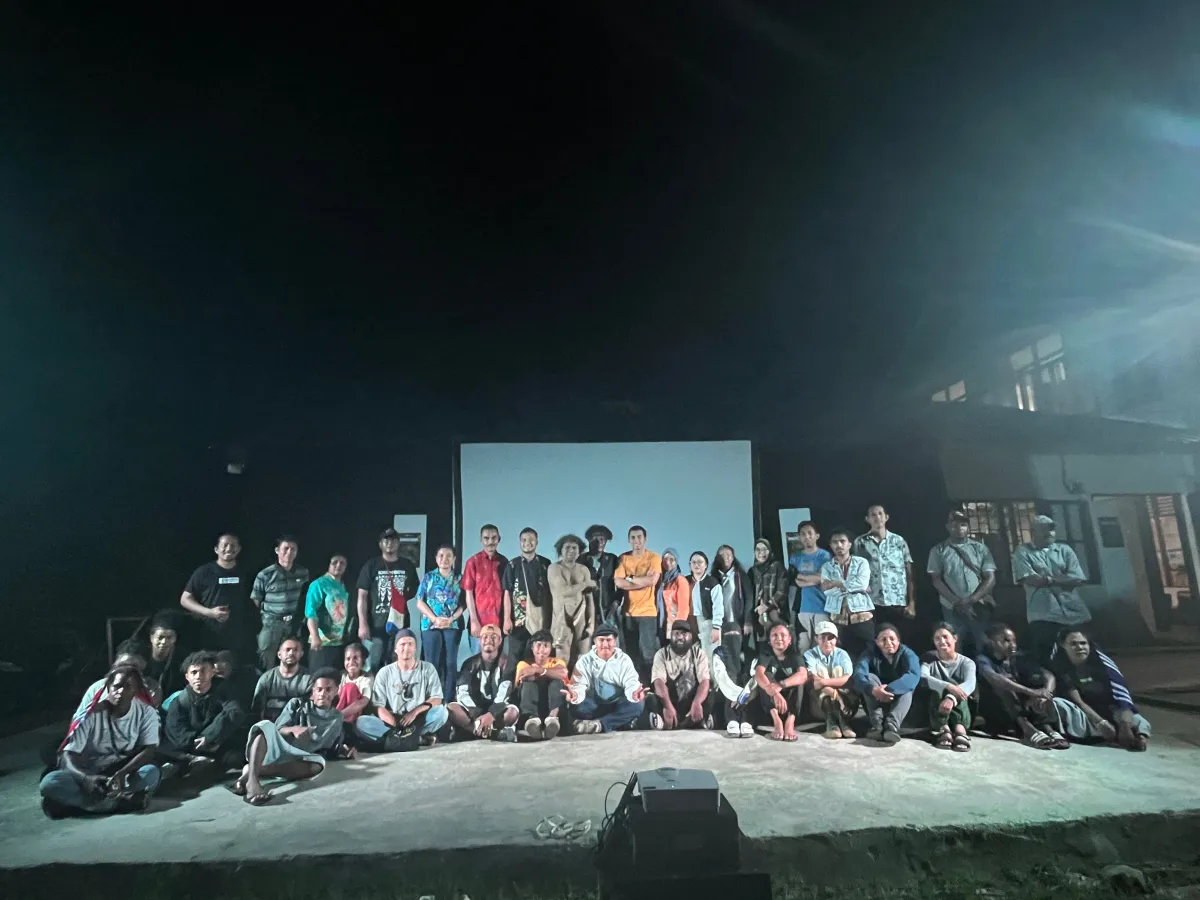
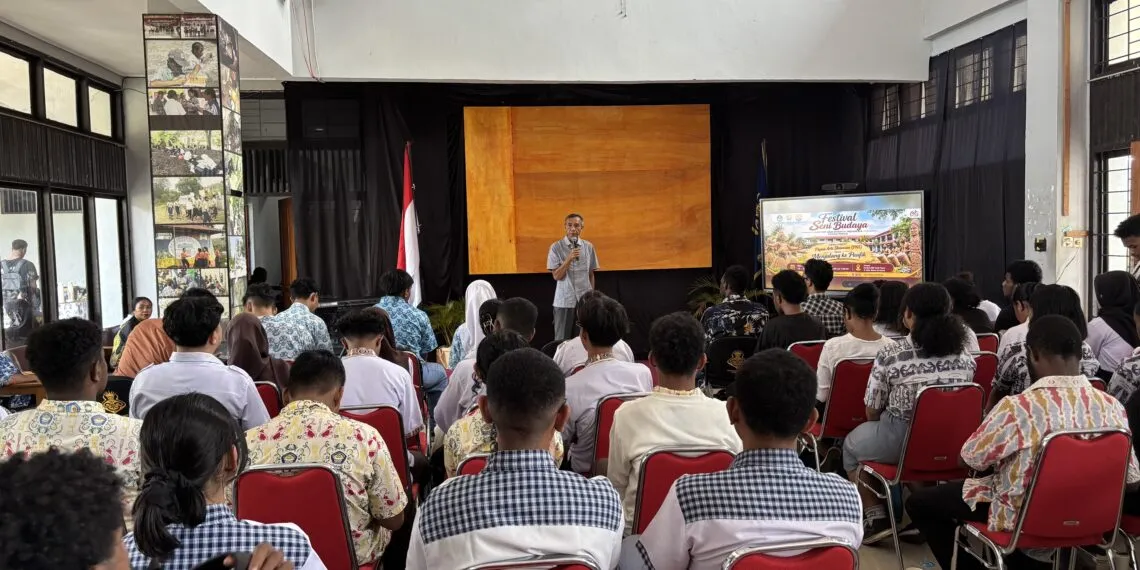
The work is displayed at the residence of Indonesia Art Movement, Entrop, South Jayapura District, Jayapura City, Papua, Thursday (31/7/2025) evening.
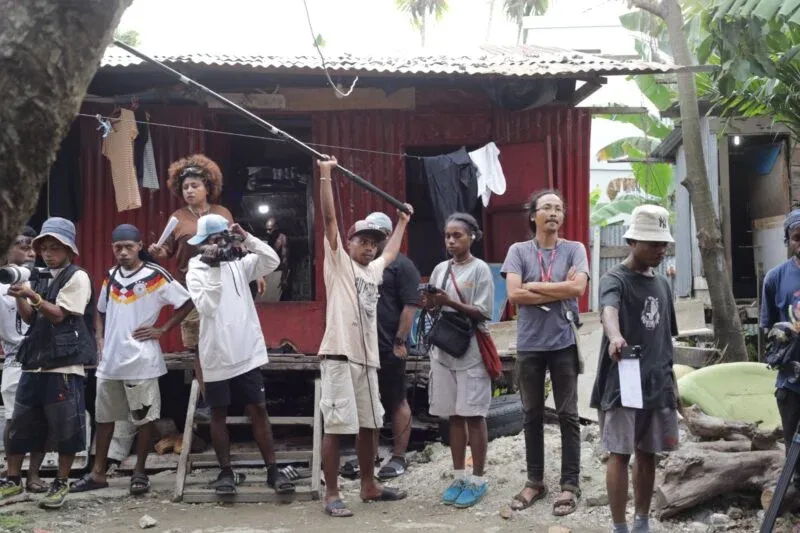
The documentary film is the first work made by ISBI Tanah Papua students, as part of their final assignment.
The ethnographic documentary Warekma, which is approximately 53 minutes long, is a video collage collected from 2015 to 2023, and depicts the procession of burning bodies of the Hubula Tribe in the Baliem Valley, Jawijaya Regency, Papua Mountains.
Before the film Warekma was shown, Miki Wuka greeted the audience with a unique appearance. He wears a cassowary feather crown, koteka, noken, and a body covered in mud. He said it was a symbol of sorrow.
"Usually when we [in Papua's mountains] wear traditional costumes with various accessories such as necklaces or bracelets, but today I only have simple accessories and my body is covered in mud," said Miki Wuka.
During the screening and exhibition of the film Warekma, there was one interesting thing that explained the values of local community beliefs, namely burning smoke.
The burning smoke that rises straight indicates that the ritual is valid, meaning that the person during his life has no sin or mistakes.
"But if there is smoke that only rotates, doesn't rise straight, and the smoke smells bad. Then [there are] remains of jaw bones and skulls [that] are still found in the burning place, it means that the spirit is still in trouble, the burning ceremony is invalid and the death is not official," he said.
Miki Wuka stated that the reason for making this film began with regret that he had not had the chance to see his father's face.
Therefore, Miki recorded a number of activities including traditional funeral ceremonies to emphasize the importance of cultural archiving. This aims to educate and motivate the younger generation to work.
"Because we have a tradition that the funeral procession [of the body] is [by] being burned, so there is no physical form of name or relic [headstone and grave] as well as a special piglet marked for [the father] that we [can] see," he said.
"Well, I admit the weakness, maybe at that time there were no media that could archive. Now, there are cameras that are strong recorders for archiving," he said again
Moreover, continued Miki, the procession was sacred. So, it cannot be recorded by outsiders, only family is allowed. To record the procession, Miki asked for traditional permission so that the spirits of his ancestors would support him in completing the film as his final assignment.
"So I not only recorded, but was directly involved in [Warekma] because those who died were my first and second biological brothers. That's why I paid for the film. I apologize if I was wrong. My goal was to mention the names of the spirits of my ancestors so that the final task could [run] without a hitch," he said.
Supervising lecturer, Muhammad Ilham M. Murda, ST, MSn said he saw a number of potentials in his students. Iam, his nickname, remembers Miki Wuka's struggle to make art a part of his life. This film is Miki's process of working with simple tools
"I appreciate that Warekma is close to him [Miki] even though no one knows about our death. His habit since childhood was to always bring a cellphone or camera, so he immortalized every event that happened in the village," said Ilham M Murda. (*)
https://jubi.id/seni-kultur/2025/rekam-kultur-warekma-lalu-film-documenter-etnografi/
Masukkan email Anda untuk menerima brosur dan pengingat jadwal pendaftaran.
 ID
 EN